

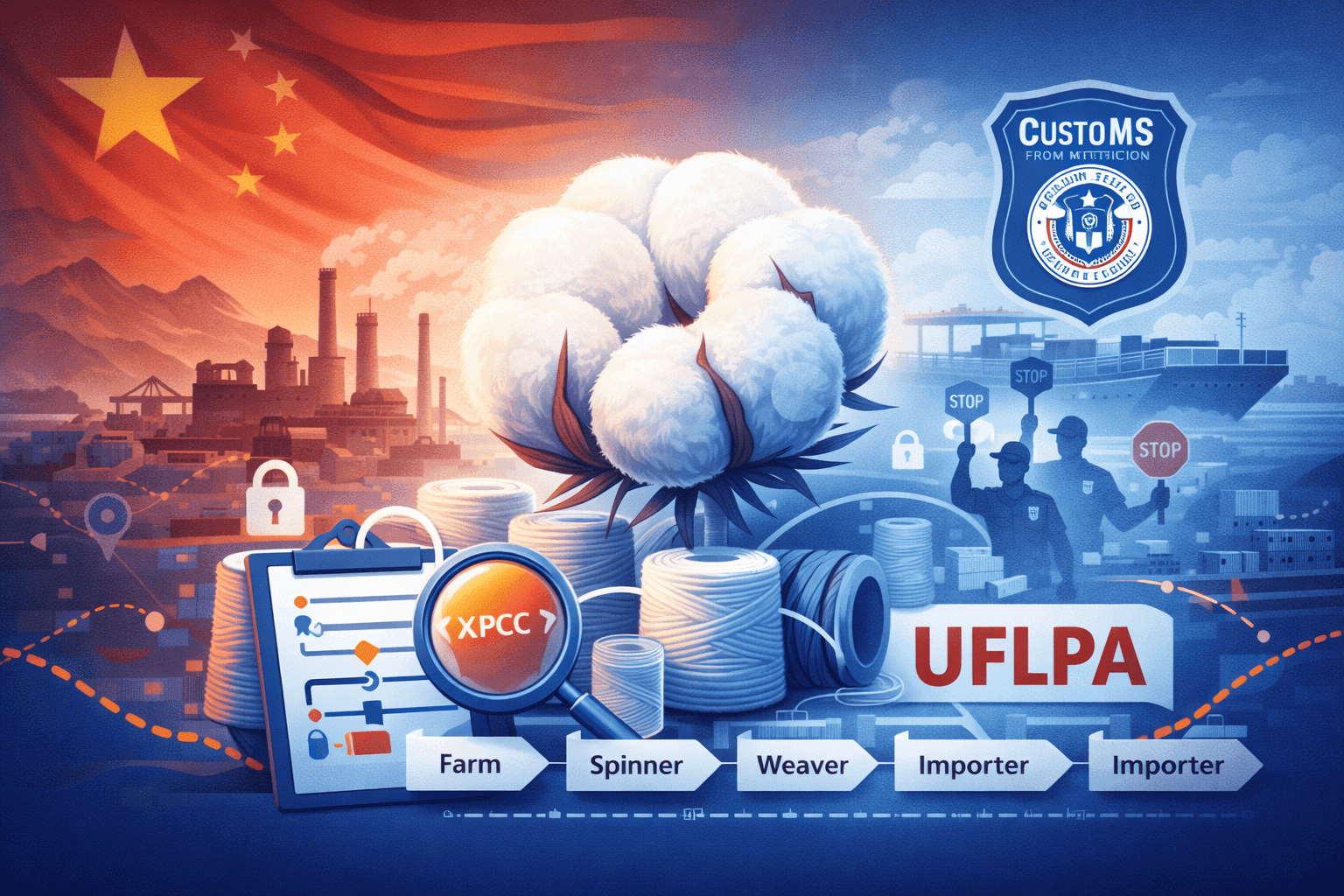
If you import apparel, textiles, or any cotton-based products, you’re in the highest-risk category for UFLPA enforcement. Cotton and textiles consistently account for over 60% of all UFLPA detentions—making supply chain compliance not just important, but essential for business survival.
Why Cotton is Ground Zero for UFLPA
The numbers tell the story:
- 85% of China’s cotton is grown in Xinjiang
- 20% of global cotton production comes from Xinjiang
- 60%+ of UFLPA detentions involve apparel/textiles
- Billions in cotton goods flow through global supply chains
The Xinjiang Production and Construction Corps (XPCC), a paramilitary organization accused of forced labor practices, controls significant cotton production in the region. XPCC was one of the first entities added to the UFLPA Entity List.
The Cotton Traceability Challenge
Unlike polysilicon (where a few major producers dominate), cotton flows through complex, fragmented supply chains:
Cotton Farm → Ginner → Spinner → Weaver/Knitter → Dye House → CMT Factory → BrandAt each stage, cotton from different sources can be blended, making traceability extremely difficult.
Where Cotton Gets Mixed
- Ginning: Cotton from multiple farms is combined
- Spinning: Fibers from different sources are spun into yarn
- Trading: Cotton is bought and sold multiple times
- Manufacturing: Fabrics from multiple mills may be used
By the time cotton becomes a finished garment, proving its origin requires documentation at every step.
High-Risk Products
Any product containing cotton is potentially at risk, but CBP focuses enforcement on:
Apparel
- T-shirts and casual wear
- Denim and jeans
- Dress shirts and formal wear
- Underwear and basics
- Athletic wear with cotton content
Home Textiles
- Bedding (sheets, pillowcases)
- Towels and bath linens
- Curtains and drapes
- Upholstery fabrics
Industrial Textiles
- Medical supplies (cotton swabs, gauze)
- Cleaning cloths and wipes
- Industrial filters
Blended Products
Even products with small cotton percentages are subject to UFLPA. A polyester shirt with 5% cotton still carries risk if that cotton originated in Xinjiang.
What CBP Looks For
When CBP targets a cotton shipment, they examine:
Country of Origin Indicators
- Where was the garment manufactured?
- Where was the fabric woven or knitted?
- Where was the cotton grown and processed?
Supply Chain Documentation
- Can you trace cotton to the farm level?
- Are there gaps in your supply chain map?
- Do your suppliers have credible attestations?
Red Flags
- Manufacturing in China (even if cotton is from elsewhere)
- Suppliers with any Xinjiang connections
- Incomplete or inconsistent documentation
- Suppliers on or connected to the Entity List
Building a Compliant Cotton Supply Chain
Step 1: Map Your Supply Chain
Create a detailed map from finished product back to cotton farm:
| Stage | Partner | Location | Documentation |
|---|---|---|---|
| CMT | Factory Name | Vietnam | Production records |
| Fabric | Mill Name | Bangladesh | Mill certificate |
| Yarn | Spinner Name | India | Yarn certification |
| Cotton | Farm/Ginner | USA/Brazil | Origin certificate |
Step 2: Verify Cotton Origin
Options for proving cotton origin:
Supplier Declarations
Written statements from each supply chain participant confirming non-Xinjiang cotton.
Cotton Certifications
- ORITAIN (isotopic testing for origin)
- Better Cotton Initiative (BCI) certification
- GOTS (Global Organic Textile Standard)
- US Cotton Trust Protocol
Traceability Programs
- Textile Exchange standards
- Chain of custody documentation
- Blockchain-based tracking systems
Step 3: Screen Your Suppliers
Check all supply chain participants against:
- UFLPA Entity List
- OFAC sanctions lists
- Known Xinjiang-connected companies
Remember: Your tier-1 supplier (the factory) isn’t your only risk. The fabric mill, yarn spinner, and cotton ginner all matter.
Step 4: Require Compliance in Contracts
Add UFLPA compliance clauses to supplier agreements:
“Supplier warrants that no cotton or other materials supplied under this agreement originate wholly or in part from the Xinjiang Uyghur Autonomous Region of China, and that no forced labor is used in the production of such materials.”
Include:
- Right to audit
- Documentation requirements
- Termination rights for non-compliance
Step 5: Maintain Documentation
Keep organized records for every shipment:
- Purchase orders and invoices
- Origin certificates for cotton
- Supplier declarations
- Mill and factory certifications
- Shipping documents
Alternative Sourcing Strategies
Many importers are restructuring supply chains to reduce Xinjiang risk:
Non-China Cotton Sources
- United States: Third-largest cotton producer, zero Xinjiang risk
- Brazil: Major exporter with growing capacity
- India: Large producer, though traceability varies
- Australia: High-quality, well-documented origin
- African nations: Growing export capacity
Non-China Manufacturing
Moving production to countries without Xinjiang cotton exposure:
- Vietnam
- Bangladesh
- Indonesia
- Turkey
- Central America
Cost Considerations
Alternative sourcing may cost more, but compare to:
- Detention storage fees
- Lost shipments
- Customer penalties
- Reputation damage
- Legal costs
Case Study: Successful Compliance
A mid-size apparel importer restructured their supply chain:
Before
- Manufacturing in China
- Unknown cotton origin
- Minimal documentation
- Two UFLPA detentions in 6 months
After
- Manufacturing moved to Vietnam
- Cotton sourced from US and Brazil with certificates
- Full supply chain mapping
- Supplier attestations at every tier
- Third-party audits of key suppliers
Result
- Zero detentions in 12 months
- 15% cost increase offset by avoided detention costs
- Stronger customer relationships due to compliance assurance
The Role of Technology
Manual cotton supply chain management is challenging. Technology helps by:
Supplier Screening
Automatically checking all supply chain participants against the Entity List and sanctions databases.
Document Management
Organizing origin certificates, declarations, and audit reports for quick access during CBP requests.
Risk Monitoring
Alerting you when suppliers are added to watch lists or when new risks emerge.
Compliance Reporting
Generating CBP-ready documentation packages on demand.
Getting Started
If you’re importing cotton products, take these steps now:
- Audit your current supply chain – Where does your cotton actually come from?
- Screen all suppliers – Are any connected to the Entity List?
- Request documentation – Get origin certificates and declarations
- Identify gaps – Where is your visibility weak?
- Develop alternatives – Build relationships with non-Xinjiang sources
Ready to de-risk your cotton supply chain? VettedImport helps apparel importers screen suppliers and document compliance. Get started free.